12.12.2023
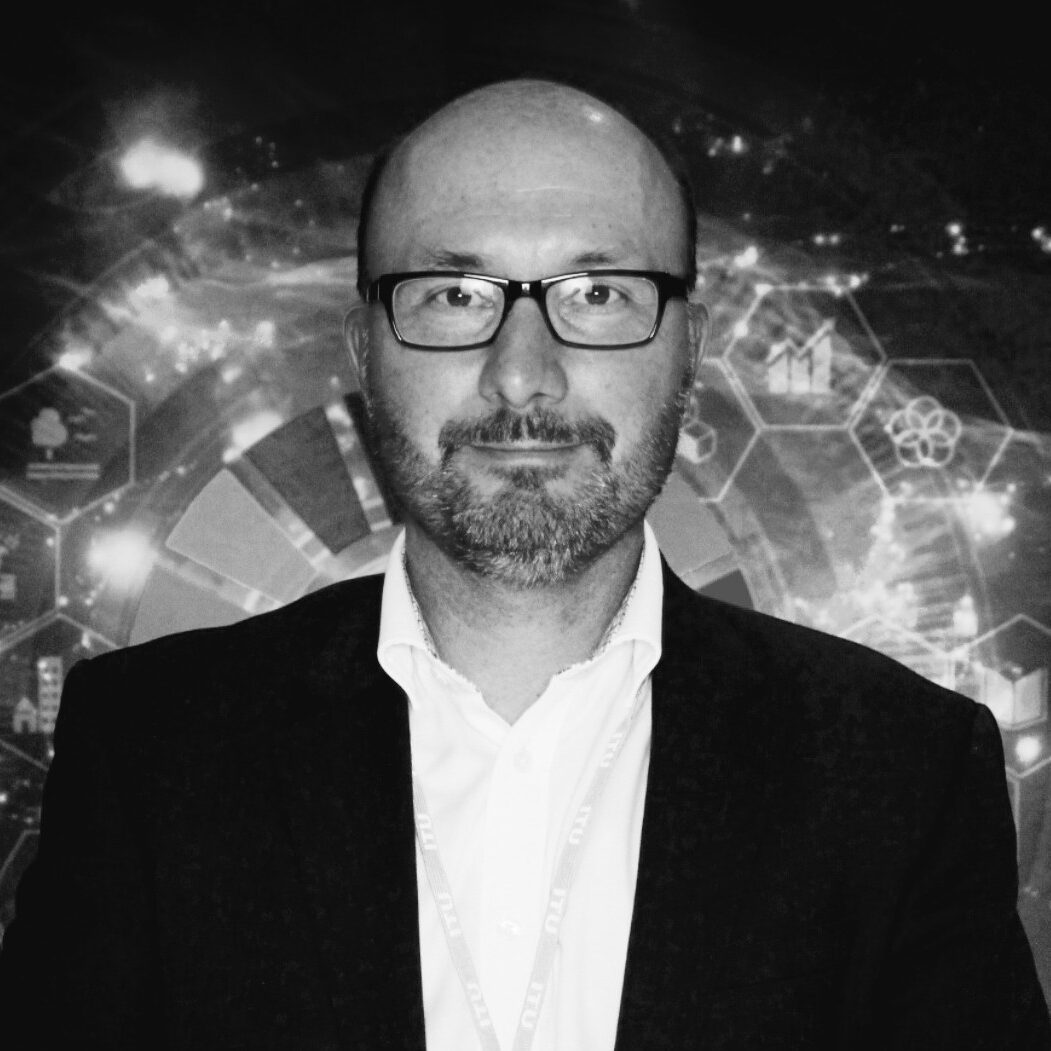
On October 12th, Guillaume and Mark were invited to a Breakfast Research and Practice seminar hosted by the Research Center for Grand Challenges at HEC Lausanne. The aim was to share their experience and thoughts about the place of technology and digital solutions to help solve the challenges associated with access to water in emerging countries and to highlight the practical steps for water operators. This blog post first summarizes the challenges and possible solutions related to water provisioning and wastewater management in the context of climate change, and then provides an outlook of the role university teaching can play in equipping future leaders to drive positive change in the sector.
We are still lagging in achieving SDG6. Today 2.2 billion people (27% of the world population) still lacks safely managed drinking water services and 3.5 billion (43%) lack safely managed sanitation services[ii]. To expedite the achievement of SG6, the UN has proposed an acceleration framework where data, information systems, and innovation play a central role[iii].
With that in mind, what is at stake for water utilities?
The following are some of the growing concerns and challenges of the sector: deteriorating water/wastewater infrastructure, lack of public appreciation for the value of water, affordability, water scarcity/supply, drought potential.
The investment cost of a new wastewater treatment plant in a middle-income country ranges from 50 to 150 €/capita and the operating costs range from 4 to 12 €/capita/year[iv]. In high income countries the construction and operating costs of a state-of-the-art plant are much higher. Construction and maintenance of the sewage collection network brings additional costs. Moreover, the systems require trained staff, tax revenues, enforcement of environmental laws, and a constant supply of electricity. These challenges are not met everywhere. Globally, 14% of water discharged from wastewater treatment plants and 52% of water discharged from septic tanks has not been safely treated[v].
Digitalization can be part of the answer to tackle these challenges, focusing on three main business areas: the management of infrastructure and operations, customer and employees/field agent engagement, and collaboration with stakeholders. Additionally, the development and deployment of more affordable treatment plant designs would benefit from recent advancements in digital data acquisition, analysis, and modelling.
The technology offering is broad, and innovators and vendors continuously bring sophisticated hardware, data, and software combinations to the market. However, practitioners still need help to integrate the novelty and realize the potential of technology to move from a planned and reactive business to a data-driven and proactive approach. Recent studies show that numerous water utilities predominantly lack the vision and the clear organization and governance required to drive the journey. Two-thirds of respondents of a GSMA (Global System for Mobile Communications Association) and the World Bank survey[vi] still need to document their digital vision, and two-thirds still need to appoint a committee to orchestrate the digital transformation of their entity. Out of the nearly one hundred water utilities surveyed worldwide with the aim of understanding the reasons for adopting digital solutions, the three main objectives include i) guaranteeing access to water (27%), ii) ensuring level and quality of service (19%), and iii) ensuring water quality (19%).
At the same time, the digital transformation of water utilities is already here. It is not new, the journey started decades ago with the introduction of IT-enabled functions. What makes the trend hotter nowadays is the variety of digital solutions on the market, the pace of change, and the level of integration across platforms. Water utilities must adopt a holistic approach throughout the delivery cycle, from design to operations. Otherwise, the risk is that all the effort and investment ends up being just another series of sophisticated pieces of technology and gigabytes of data – without transforming the organization.
Key characteristics of a successful digital transformation journey are: ability to design and deliver numerous projects across the organization at the same time, mobilization of a variety of skills and technical competencies, and clear governance established on fact-based prioritization.
Universities can play a crucial role in providing the business world with skilled and futureproof talents. What can be the message and learning points for the educational community about skills and competencies?
[i] https://www.eawag.ch/en/department/eng/projects/abwasser/n2oara/
[ii] https://unstats.un.org/sdgs/files/report/2023/2023_Factsheets.pdf
[iii] https://www.unwater.org/our-work/sdg-6-global-acceleration-framework
[iv] https://www.oecd.org/env/outreach/36227787.pdf
[v] UN Habitat and WHO, 2021. Progress on wastewater treatment – Global status and acceleration needs for SDG indicator 6.3.1. United Nations Human Settlements Programme (UN-Habitat) and World Health Organization (WHO), Geneva.
[vi] https://www.gsma.com/mobilefordevelopment/blog/innovative-finance-digital-adoption-and-partnerships-our-reflections-from-world-water-week-2022/
[vii] https://theshiftproject.org/wp-content/uploads/2019/03/Lean-ICT-Report_The-Shift-Project_2019.pdf

12.12.2023
On October 12th, Guillaume and Mark were invited to a Breakfast Research and Practice seminar hosted by the Research Center for Grand Challenges at HEC Lausanne. The aim was to share their experience and thoughts about the place of technology and digital solutions to help solve the challenges associated with access to water in emerging countries and to highlight the practical steps for water operators. This blog post first summarizes the challenges and possible solutions related to water provisioning and wastewater management in the context of climate change, and then provides an outlook of the role university teaching can play in equipping future leaders to drive positive change in the sector.
We are still lagging in achieving SDG6. Today 2.2 billion people (27% of the world population) still lacks safely managed drinking water services and 3.5 billion (43%) lack safely managed sanitation services[ii]. To expedite the achievement of SG6, the UN has proposed an acceleration framework where data, information systems, and innovation play a central role[iii].
With that in mind, what is at stake for water utilities?
The following are some of the growing concerns and challenges of the sector: deteriorating water/wastewater infrastructure, lack of public appreciation for the value of water, affordability, water scarcity/supply, drought potential.
The investment cost of a new wastewater treatment plant in a middle-income country ranges from 50 to 150 €/capita and the operating costs range from 4 to 12 €/capita/year[iv]. In high income countries the construction and operating costs of a state-of-the-art plant are much higher. Construction and maintenance of the sewage collection network brings additional costs. Moreover, the systems require trained staff, tax revenues, enforcement of environmental laws, and a constant supply of electricity. These challenges are not met everywhere. Globally, 14% of water discharged from wastewater treatment plants and 52% of water discharged from septic tanks has not been safely treated[v].
Digitalization can be part of the answer to tackle these challenges, focusing on three main business areas: the management of infrastructure and operations, customer and employees/field agent engagement, and collaboration with stakeholders. Additionally, the development and deployment of more affordable treatment plant designs would benefit from recent advancements in digital data acquisition, analysis, and modelling.
The technology offering is broad, and innovators and vendors continuously bring sophisticated hardware, data, and software combinations to the market. However, practitioners still need help to integrate the novelty and realize the potential of technology to move from a planned and reactive business to a data-driven and proactive approach. Recent studies show that numerous water utilities predominantly lack the vision and the clear organization and governance required to drive the journey. Two-thirds of respondents of a GSMA (Global System for Mobile Communications Association) and the World Bank survey[vi] still need to document their digital vision, and two-thirds still need to appoint a committee to orchestrate the digital transformation of their entity. Out of the nearly one hundred water utilities surveyed worldwide with the aim of understanding the reasons for adopting digital solutions, the three main objectives include i) guaranteeing access to water (27%), ii) ensuring level and quality of service (19%), and iii) ensuring water quality (19%).
At the same time, the digital transformation of water utilities is already here. It is not new, the journey started decades ago with the introduction of IT-enabled functions. What makes the trend hotter nowadays is the variety of digital solutions on the market, the pace of change, and the level of integration across platforms. Water utilities must adopt a holistic approach throughout the delivery cycle, from design to operations. Otherwise, the risk is that all the effort and investment ends up being just another series of sophisticated pieces of technology and gigabytes of data – without transforming the organization.
Key characteristics of a successful digital transformation journey are: ability to design and deliver numerous projects across the organization at the same time, mobilization of a variety of skills and technical competencies, and clear governance established on fact-based prioritization.
Universities can play a crucial role in providing the business world with skilled and futureproof talents. What can be the message and learning points for the educational community about skills and competencies?
[i] https://www.eawag.ch/en/department/eng/projects/abwasser/n2oara/
[ii] https://unstats.un.org/sdgs/files/report/2023/2023_Factsheets.pdf
[iii] https://www.unwater.org/our-work/sdg-6-global-acceleration-framework
[iv] https://www.oecd.org/env/outreach/36227787.pdf
[v] UN Habitat and WHO, 2021. Progress on wastewater treatment – Global status and acceleration needs for SDG indicator 6.3.1. United Nations Human Settlements Programme (UN-Habitat) and World Health Organization (WHO), Geneva.
[vi] https://www.gsma.com/mobilefordevelopment/blog/innovative-finance-digital-adoption-and-partnerships-our-reflections-from-world-water-week-2022/
[vii] https://theshiftproject.org/wp-content/uploads/2019/03/Lean-ICT-Report_The-Shift-Project_2019.pdf